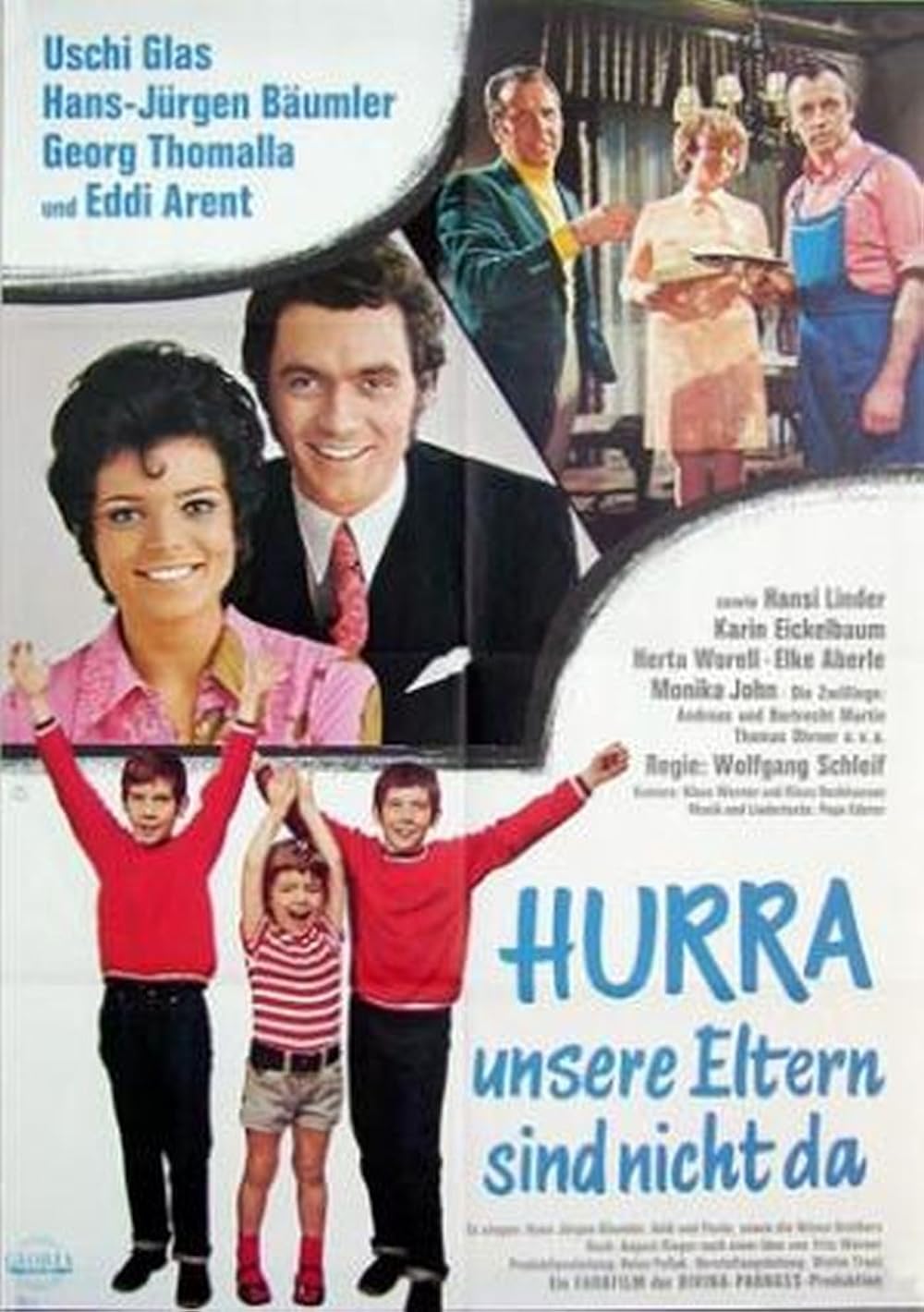
Unraveling the Enigma of "Hurra Unsere Eltern Sind Nicht Da": A 1970 Cinematic Mystery
In the vast, sprawling annals of cinema, there exist countless films that have captured generations, sparked debates, and become integral parts of cultural consciousness. Then, there are those that linger at the edges, whispered about in niche forums, their very existence a captivating puzzle. Such is the case with the 1970 German production, Hurra Unsere Eltern Sind Nicht Da. For enthusiasts and historians alike, this film presents a peculiar challenge: despite its intriguing title and documented existence, comprehensive plot details, thematic analyses, and critical insights remain remarkably elusive. This article delves into the metadata surrounding this obscure gem, piecing together what we know, speculating on what might have been, and exploring the broader implications of its digital footprint, or lack thereof.
The quest for knowledge about Hurra Unsere Eltern Sind Nicht Da often leads to a similar dead end: a tantalizing list of metadata – year, director, cast, crew, production details, and release dates – but no concrete summary of its narrative. Popular film databases, usually brimming with synopses, often draw a blank, explicitly stating the absence of a plot description. This phenomenon transforms what might have been a simple family comedy or a lighthearted adventure into a genuine cinematic mystery. What was the story of these liberated children? What kind of mischief did they get into? And why has its narrative largely vanished from common record, even in the digital age?
Unpacking the Title: "Hurra Unsere Eltern Sind Nicht Da" – Semantic Analysis and Inferences
The title itself, "Hurra, unsere Eltern sind nicht da", translates to "Hooray, Our Parents Aren't Here" or "Hooray, Our Parents Are Not Here". This phrase immediately conjures images of youthful freedom, mischief, and perhaps a touch of rebellion. It's a sentiment universally understood by children and teenagers, hinting at a world where rules are temporarily suspended, and adventure beckons. Given the year of its release, 1970, this title resonates even more profoundly with the cultural shifts of the era.
- Themes of Freedom and Autonomy: The title strongly suggests a narrative centered around children or young adults experiencing a period of unsupervised liberty. This could range from innocent fun to more adventurous, perhaps even perilous, situations.
- Genre Clues: While definitive genre labels are scarce in the available information, the title leans heavily towards a family film, a comedy, or a youth adventure. There's an inherent lightheartedness and exuberance implied, although the absence of adult supervision could also pave the way for dramatic or mysterious elements.
- Socio-Cultural Context: The early 1970s in Germany, much like the rest of the Western world, was a period of evolving social norms. Youth culture was prominent, and themes of independence and challenging traditional authority were common in various forms of media. A film celebrating children's autonomy, even temporarily, would have been very much in tune with the times.
Without a plot, we are left to infer. Was it a tale of children embarking on a grand adventure while their parents were away? Perhaps a comedic look at the chaos that ensues when the guardians are absent? Or could it have contained a subtle message about responsibility, independence, and the hidden challenges that come with newfound freedom? The ambiguity itself adds a layer of intrigue, compelling us to imagine the myriad possibilities within its evocative title. For deeper exploration into what little we know about its narrative void, you might want to read Decoding Hurra Unsere Eltern Sind Nicht Da: The 1970 Film with a Missing Synopsis.
The 1970 Cinematic Landscape: Contextualizing a Missing Narrative
To truly appreciate the mystery surrounding Hurra Unsere Eltern Sind Nicht Da, it's essential to place it within the context of German and European cinema of 1970. This period was a fascinating crossroads for filmmaking. On one hand, mainstream commercial cinema continued to thrive, often producing family-friendly fare, comedies, and genre films. On the other hand, the New German Cinema movement was gaining momentum, pushing artistic boundaries and challenging conventional narratives with more introspective, socio-politically charged works.
A film titled Hurra Unsere Eltern Sind Nicht Da likely fell into the former category, targeting a broader audience, perhaps even children or families during holiday releases. German cinema of the late 60s and early 70s saw a number of light comedies, often featuring ensemble casts and episodic plots. While the specific director, cast, and crew details (which exist in various metadata sources) could offer further clues about its stylistic leanings or thematic depth, the general landscape suggests a production that aimed for entertainment rather than avant-garde exploration.
Consider the production specifics of the time:
- Technological Limitations: Filmmaking was a more labor-intensive and costly endeavor than today. Distribution relied heavily on physical prints, making archival efforts crucial.
- Local Focus: Many European productions, especially those not aimed at major international festivals, had a primarily domestic or regional release. This could explain why comprehensive documentation might not have been prioritized for a global audience.
- Genre Conventions: Films for younger audiences or families often employed clear moral lessons, slapstick humor, or adventurous escapades. It's plausible that Hurra Unsere Eltern Sind Nicht Da adhered to these conventions, making its plot perhaps less "unique" in the grand scheme of cinematic history, thus contributing to its plot's obscurity over time.
Understanding this backdrop helps us recognize that not every film from this era was destined for perpetual academic scrutiny or widespread digital preservation. Some were simply made, screened, enjoyed, and then, slowly but surely, faded from easily accessible public memory, leaving only their metadata behind.
The Challenge of Obscurity: Why is Information on "Hurra Unsere Eltern Sind Nicht Da" So Scarce?
The pronounced lack of readily available plot summaries and analytical text for Hurra Unsere Eltern Sind Nicht Da highlights a broader issue in film archiving and digital preservation, particularly for non-blockbuster or non-award-winning films. Several factors contribute to this cinematic obscurity:
- Pre-Digital Era Documentation: Before the internet, film information was primarily stored in physical archives, industry publications, and local newspapers. Digitizing all this information is an immense, ongoing task, and less prominent films often get overlooked.
- Limited Initial Distribution: If Hurra Unsere Eltern Sind Nicht Da had a limited theatrical run or was primarily distributed within a specific region of Germany, its initial exposure and subsequent documentation would naturally be constrained.
- Lack of Critical Acclaim or Controversy: Films that garner significant critical attention (positive or negative) or spark public debate tend to generate more written material – reviews, articles, academic papers. If Hurra Unsere Eltern Sind Nicht Da was a modest, unassuming production, it might simply not have created enough buzz to warrant extensive written discourse beyond initial promotional materials.
- Language Barriers: Even if summaries or reviews existed in German, their translation and widespread dissemination in English-language databases might be limited unless there's significant international interest.
- Archival Gaps: Even national film archives can have gaps, especially for films that weren't considered "culturally significant" at the time of their release or during subsequent preservation efforts. Materials can be lost, damaged, or simply not prioritized for digitization.
This situation isn't unique to Hurra Unsere Eltern Sind Nicht Da. Countless films, especially those from the mid-20th century in various European countries, face similar challenges. It serves as a stark reminder of the fragile nature of our cinematic heritage and the continuous effort required to preserve and make accessible the full spectrum of film history.
Practical Tips for Rediscovering Obscure Films:
- Consult National Film Archives: Organizations like the Bundesarchiv in Germany are primary repositories for national film history. Direct inquiries might yield more specific details or even access to original production notes.
- Specialized Film Forums and Communities: Online communities dedicated to obscure or vintage cinema (like those that list Hurra Unsere Eltern Sind Nicht Da) are often populated by passionate individuals who might possess rare knowledge or materials.
- Academic Film Studies: University film departments or researchers specializing in German cinema of the 1970s might have encountered or be researching similar films.
- Old Film Guides and Almanacs: Pre-internet print resources sometimes contain brief summaries for films that never made it into modern digital databases.
Beyond the Metadata: Speculating on Themes and Legacy
Despite the factual void, the existence of Hurra Unsere Eltern Sind Nicht Da, even as mere metadata, invites speculation and imaginative reconstruction. If we were to hypothesize about its core themes, drawing upon its title and the era, what might we find?
The film could have explored:
- The Joys and Perils of Unsupervised Play: A classic narrative trope where children learn valuable lessons about responsibility and consequence when left to their own devices.
- Family Dynamics and Communication: Perhaps the parents' absence isn't just a plot device for fun, but a way to subtly comment on parental presence, children's desires, and the complexities of family life.
- A Microcosm of Society: The children's temporary world, free from adult constraints, could have mirrored societal structures, power struggles, or problem-solving in miniature.
- Nostalgia and Innocence: For contemporary audiences, the film might have evoked a sense of simpler times, a yearning for childhood freedom that has become increasingly constrained.
Its legacy, though not widely documented, exists in its mere presence on film lists and user-generated content platforms. The fact that film buffs are still listing it, even without extensive knowledge, indicates a persistent curiosity. It serves as a placeholder for a specific moment in time, a testament to the sheer volume of cinematic output, and a prompt for ongoing preservation efforts. The community insights surrounding this film, however sparse, are collected and discussed in articles like Hurra Unsere Eltern Sind Nicht Da: Community Insights on the 1970 Film.
Conclusion
The mystery of Hurra Unsere Eltern Sind Nicht Da is not just about a missing plot summary; it's a window into the challenges of film history, archiving, and the ephemeral nature of popular culture. While we may not have a clear picture of its narrative, the title itself provides a compelling hook, inviting us to imagine a world of youthful exuberance and potential adventure. For film historians, researchers, and dedicated enthusiasts, films like this represent both a frustration and an exciting challenge – a call to action to unearth, preserve, and illuminate the forgotten corners of cinematic heritage. Perhaps one day, a lost print will be discovered, a forgotten script will surface, or a long-silent cast member will share their memories, finally allowing the full story of "Hooray, Our Parents Aren't Here" to be told. Until then, its metadata serves as a poignant reminder that every film, no matter how obscure, holds a piece of our shared cultural past.