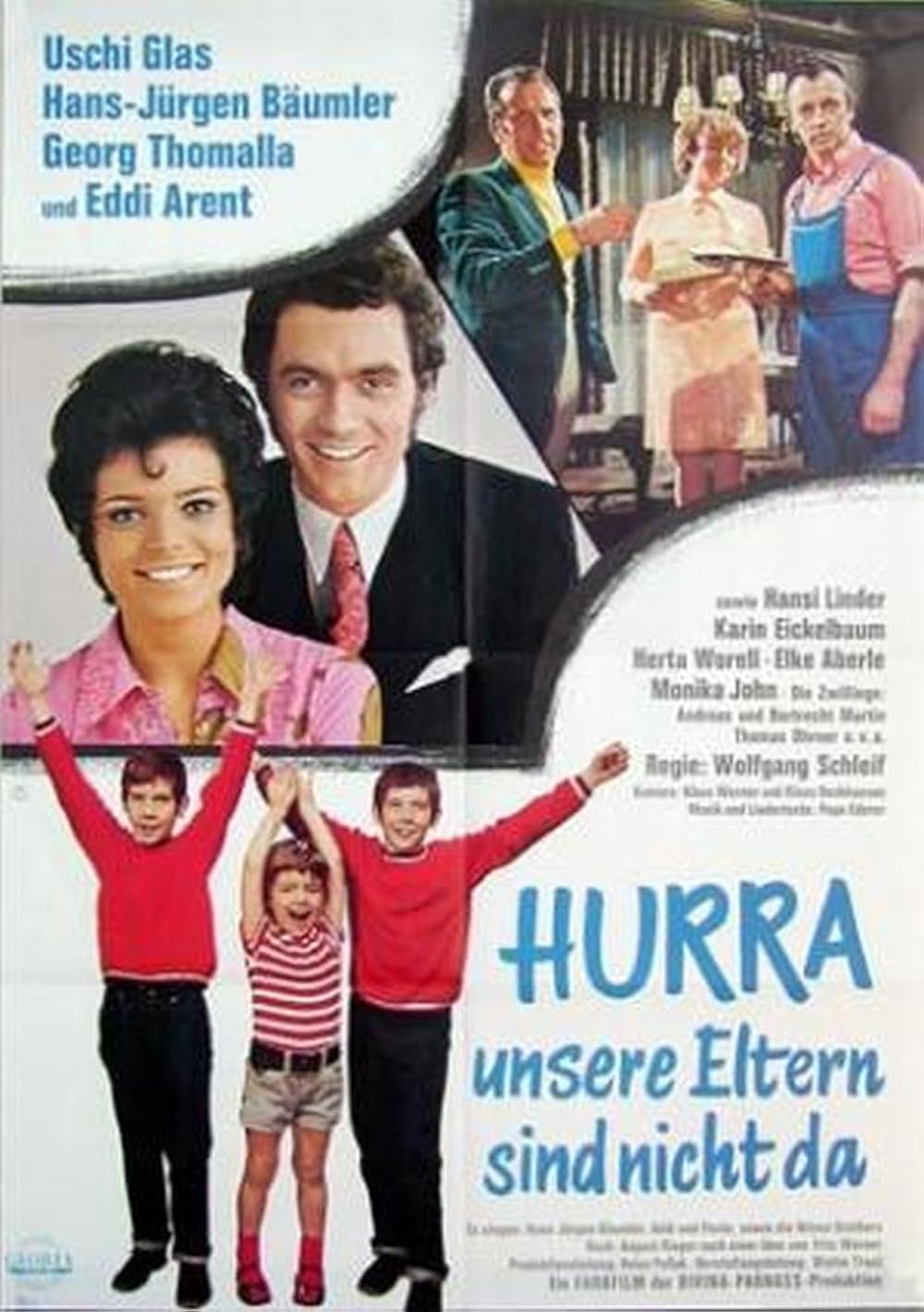
The Enduring Allure of "Hurra Unsere Eltern Sind Nicht Da": A Deep Dive into a 1970s German Cult Classic
In the vast landscape of cinematic history, some films captivate not just with their explicit narratives but also with their elusive charm and the discussions they spark among dedicated fans. Such is the case with Hurra Unsere Eltern Sind Nicht Da, a German comedy-romance from 1970 that, despite its somewhat obscure plot details in modern databases, continues to pique the curiosity of film enthusiasts and evoke nostalgic memories for those who experienced it firsthand. The title itself—"Hurray, Our Parents Aren't Home"—is a potent evocation of youthful freedom, mischief, and the boundless possibilities that arise when adult supervision temporarily vanishes.
Released during a vibrant period for German cinema, Hurra Unsere Eltern Sind Nicht Da was directed by the prolific Alfred Vohrer. Vohrer was a director known for his versatility, having helmed a wide range of productions from thrillers and crime films to lighthearted comedies, often with a distinct flair that captured the zeitgeist of post-war Germany. His ability to craft engaging narratives across genres ensured that his films, including this one, resonated with broad audiences. This particular film, steeped in the tropes of 1970s youth culture, aimed squarely at a demographic eager for stories reflecting their burgeoning independence and carefree spirit. It promised an escapist romp, a theme that has timeless appeal.
Piecing Together the Narrative: Community Speculation and Memory
One of the most fascinating aspects of Hurra Unsere Eltern Sind Nicht Da is the relative scarcity of readily available plot summaries or detailed analyses in contemporary film databases. Unlike many films of its era, a concise synopsis often eludes modern search efforts, creating a unique challenge and, perhaps, an even deeper sense of intrigue for those encountering it today. This absence doesn't diminish its standing; instead, it elevates the importance of community insights, personal recollections, and fragmented discussions among long-time fans.
Without an official storyline to guide us, the film’s title, genre classification (comedy, romance), and the era of its release serve as our primary clues. We can reasonably infer that Hurra Unsere Eltern Sind Nicht Da likely depicts a scenario where a group of young protagonists, freed from parental oversight, embarks on a series of adventures. These could range from innocent pranks and elaborate parties to the blossoming of first loves and humorous mishaps. The "comedy" genre tag suggests lighthearted situations, while "romance" points to developing relationships and perhaps even a touch of dramatic tension as characters navigate their feelings.
- Inferred Themes: Freedom, youthful rebellion, first love, coming-of-age, and the universal desire for independence.
- Typical Tropes: House parties gone awry, mischievous schemes, secret rendezvous, and the humorous clash between youthful exuberance and unexpected challenges.
- Cultural Snapshot: The film likely offers a valuable glimpse into West German youth culture of the early 1970s, from fashion and music to social norms and aspirations.
It is within online forums, dedicated film communities, and personal blogs that the true essence of Hurra Unsere Eltern Sind Nicht Da often emerges. Fans recall specific scenes, quote memorable lines, or share anecdotes about seeing it in theaters or on television. These collective memories form a vibrant, living narrative, filling the void left by more formal documentation. For a deeper dive into this enigma, explore Decoding Hurra Unsere Eltern Sind Nicht Da: The 1970 Film with a Missing Synopsis, where the very challenge of its missing plot is the focus.
Behind the Scenes: The Talents That Shaped the Film
While the exact narrative details might be elusive, the names associated with Hurra Unsere Eltern Sind Nicht Da are anything but. The film boasted a cast of popular and emerging German actors who brought considerable charm and talent to the screen, significantly contributing to its appeal. Central to its recognition is the presence of stars like Uschi Glas and Hans Kraus, two figures whose careers were deeply intertwined with German popular cinema of the era.
Uschi Glas was a genuine screen icon of the late 1960s and 1970s, known for her captivating presence and ability to portray both innocent and spirited characters. Her roles often defined the image of the independent young woman in German films, making her a perfect fit for a narrative centered on youthful freedom. Alongside her, Hans Kraus brought his own brand of youthful charisma. Kraus, often associated with his role as Pepe Nietnagel in the "Lümmel von der ersten Bank" series, embodied the archetype of the mischievous yet endearing schoolboy. The dynamic between Glas and Kraus, whether romantic or purely comedic, would undoubtedly have been a major draw for audiences.
Other notable cast members like Ilja Richter, famous for his vivacious persona as a TV show host and actor, and other ensemble players would have rounded out a lively cast, each bringing their unique energy to Vohrer's direction. The combination of established stars and fresh faces under a seasoned director like Alfred Vohrer suggests a production aimed at delivering high-quality, entertaining content, characteristic of the German film industry's efforts to cater to a diverse audience during that period.
Understanding the context of these performers and the director offers invaluable insight into the film's intended tone and audience. For more on the factual underpinnings of this film, delve into Hurra Unsere Eltern Sind Nicht Da: Exploring the Metadata of a 1970 Mystery, which sheds light on the foundational information available.
Why "Hurra Unsere Eltern Sind Nicht Da" Still Resonates Today
Decades after its initial release, Hurra Unsere Eltern Sind Nicht Da continues to hold a special place in the hearts of many, and not just for nostalgic reasons. Its enduring appeal can be attributed to several factors:
- Nostalgic Value: For those who grew up in 1970s Germany, the film serves as a potent time capsule, evoking memories of youth, cultural trends, and a simpler cinematic era. It's a journey back to a time when lighthearted entertainment provided a welcome escape.
- The Charm of the Unknown: The very mystery surrounding its plot makes it intriguing for modern cinephiles. It challenges them to piece together its story from fragmented memories and metadata, turning the viewing experience (or even the research experience) into an active archaeological endeavor.
- Celebration of Youth: The universal themes of freedom, budding romance, and youthful shenanigans resonate across generations. While the setting is specific to the 1970s, the underlying emotions and desires are timeless.
- Cultural Significance: The film is a piece of German cinematic history. It showcases the work of a notable director and popular actors, contributing to a broader understanding of German cultural output during a specific post-war period.
- Cult Classic Status: Films that don't always achieve mainstream critical acclaim but gather a devoted following over time often become cult classics. Hurra Unsere Eltern Sind Nicht Da embodies this, cherished by a community that values its unique contribution to film history.
For budding film historians or enthusiasts of forgotten gems, seeking out Hurra Unsere Eltern Sind Nicht Da offers a rewarding experience. It's an opportunity to connect with a film not just as a passive viewer, but as an active participant in its ongoing cultural legacy. Discussions around such films foster a sense of community, allowing shared memories to enrich the collective understanding of cinematic heritage.
Practical Tips for Engaging with "Hurra Unsere Eltern Sind Nicht Da"
If you're intrigued by this 1970 German film and wish to explore its legacy, here are some practical tips:
- Seek Out Community Forums: Websites like Letterboxd, IMDb, or dedicated German film forums are excellent places to find user reviews, discussions, and personal anecdotes about the film. These offer the richest "community insights."
- Explore Archival Resources: Some national film archives or specialized libraries might hold production stills, contemporary reviews, or even full synopsis documents that are not widely available online.
- Watch with an Open Mind: If you manage to find a copy of the film, watch it not just for its plot, but for its historical context, performances, and how it reflects its era. The experience itself is part of the insight.
- Engage in Discussion: Don't be afraid to share your own thoughts and theories about the film. Your perspective can contribute to the ongoing community effort to understand and appreciate its place in cinema.
- Consider the Director's Other Works: Exploring Alfred Vohrer's broader filmography can provide context for his style and thematic interests, which might offer clues about this particular film.
The journey to understand Hurra Unsere Eltern Sind Nicht Da is less about a straightforward plot reveal and more about a communal excavation of cinematic memory. It’s a testament to how films, even seemingly obscure ones, can continue to live and breathe through the shared experiences and discussions of their audience.
In conclusion, Hurra Unsere Eltern Sind Nicht Da stands as a fascinating example of a film whose legacy is as much about its community-driven interpretation as it is about its original cinematic impact. Its intriguing title, the talents involved, and its position as a cultural artifact of 1970s Germany ensure its continued relevance. For those willing to delve beyond conventional summaries, it offers a rewarding exploration into the power of collective memory and the enduring charm of a bygone era, proving that some of the most captivating stories are those we help to tell together.